
.png)
.png)


Plastic Literacy: My Journey Towards a Zero–waste Life

Updated: Jun 17
In the 21st century, we are proud of our advanced technologies and innovations that make life better. But while we move forward, our bond with nature is getting weaker, creating problems for future generations. One of the biggest issues we face today is plastic pollution, which needs our urgent attention.
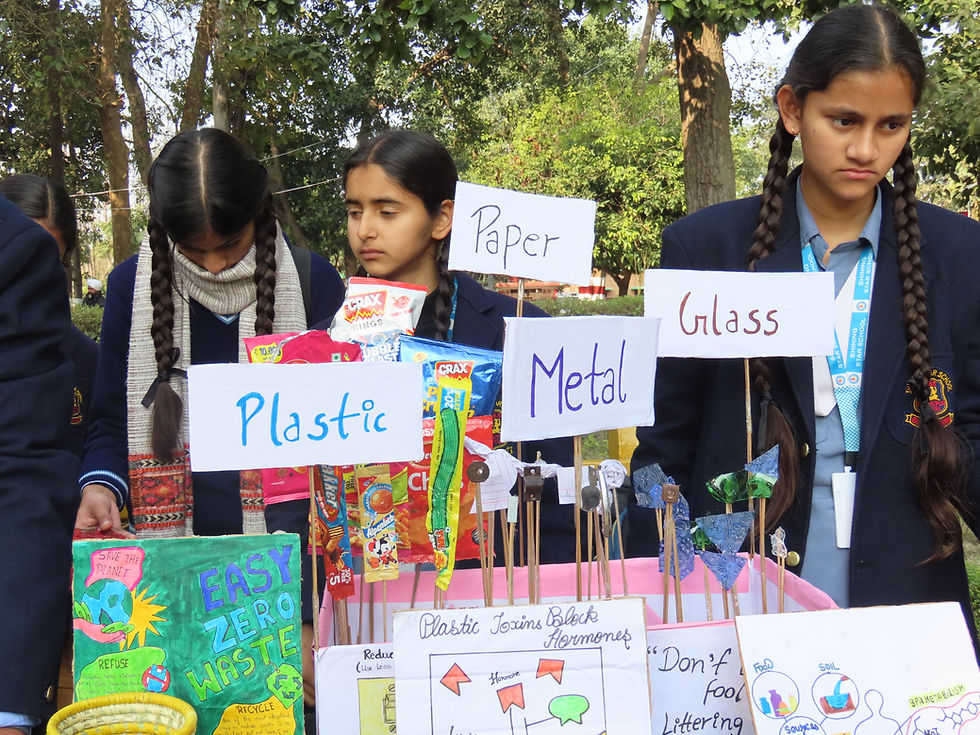
photo credits: green hub
While most people are aware of the environmental pollution risks associated with plastic, they are rarely aware of the equally serious health risks posed by plastic packaging. The consumption of packaged foods and beverages can lead to significant health risks due to the leaching of microplastics and hormone-disrupting chemicals, such as BPA & phthalates from plastic packaging into food materials.

photo credits: IPEN and Endocrine Society Report on EDCs
In today’s fast-paced world, where convenience drives our reliance on packaged foods, these harmful chemicals present in plastic packaging are making us increasingly vulnerable to health issues. Alarmingly, even unborn children are at risk due to the widespread consumption of packaged food. This cultural shift towards convenience is not only harming our environment but also endangering our well-being.

photo credits: wikimedia commons
My journey towards a plastic-free life began in Grade Eleven, when Dr. Soumya Prasad from Nature Science Initiative visited our school for the first time. She gave an eye-opening session on plastic and its harmful effects on both our health and the environment.
Dr. Prasad's presentation showed shocking data about animal deaths caused by plastic pollution, making us realize the pressing need to act. We learned how plastic has entered our lives from water bottles to our food chain. It is hard to imagine life without it, but its impact is everywhere— even in our bodies.
As time passed, over a few months and weeks, discussions about this topic started happening in our school. Around the same time, the Nature Science Initiative (NSI) started working more intensively on plastic literacy with students from different schools. I was fortunate to be selected for the NSI Plastic Literacy Internship.
Along with one of my junior schoolmates, I spent three days at the NSI campus. During the internship, Dr. Soumya Prasad introduced us to plastic literacy in great detail. We learned about the harmful effects of plastic on human health, wildlife, and biodiversity. The sessions helped us understand how plastic impacts almost every aspect of our daily lives.
We were four interns working in a team to develop practical plans to spread awareness about plastic pollution among students and teachers in our school. After returning from the internship, we put our ideas into action. We launched a 30-day Sustainable Plastic-Free Challenge and conducted awareness activities throughout the school. We spoke about the dangers of plastic during morning assemblies and encouraged students to reduce their use of plastic and adopt more sustainable alternatives. These efforts helped many students become more conscious of their choices and find ways to use less plastic in their everyday lives.
We also started NPS Eco Club focused on these issues. Our club works actively in these areas, and the NSI team closely supports us. They provide us with opportunities for short term internships in Dehradun, where we gain valuable technical knowledge.
We learnt more about how harmful plastic is to our health, especially when we consume junk food or drinks in plastic packaging. It can affect our bodies in many ways by blocking hormones such as estrogen, testosterone, thyroid etc. Based on what we learnt, we developed a concrete strategy to address this problem at our school and in our community.

photo credits: wikimedia commons
Our learning horizon continued to expand, and we became more aware of the valuable contributions we could make. Based on this, we launched a 30-day sustainable plastic-free challenge through an online campaign, which turned out to be quite successful. The impact of all this is clearly visible among the students and teachers of our school. When we look at plastic usage, we have significantly reduced the usage of packaged foods among the students and their families by at least 10% in most cases and much more in others .
Change is achievable through collective efforts and small steps. Let us take a recent example that highlights this. On the 4th of October, during the Chandrakala Joshi & Shekhar Joshi Smriti Lecture, more than guests attended the event throughout the day on our school campus. Despite the temperature reaching about 33°C, people stayed hydrated and lunched under the tent using conventional steel and glass utensils instead of plastic disposables. After the event, we were pleased to find that there was almost no plastic or garbage left on the campus. This achievement was the result of the collective efforts of our teammates and the event organizers, who made the decision to host a plastic-free event. No plastic was used for decorations, and no disposables were used for water or food. The NPS Eco Club and our peers are committed to making our campus waste-free and promoting a cleaner environment.
There are several other examples of efforts to reduce plastic usage. For instance, students no longer celebrate their birthdays by distributing toffees and chocolates wrapped in plastic. They are also trying to avoid using plastic products like bottles or tiffin boxes, opting for eco-friendly alternatives instead. While these are small steps, we can collectively make a significant impact even through small efforts to save the environment.
We are learning new methods to tackle the contemporary plastic challenge in real life. While it may not be possible to completely eliminate plastic from our lives, it can certainly be replaced with alternative products that are more sustainable.
Supported by Royal Enfield


Comments